Lucretia#
Research tandem: How can we identify strategic omissions using NLP methods?
Reading time: 5 min
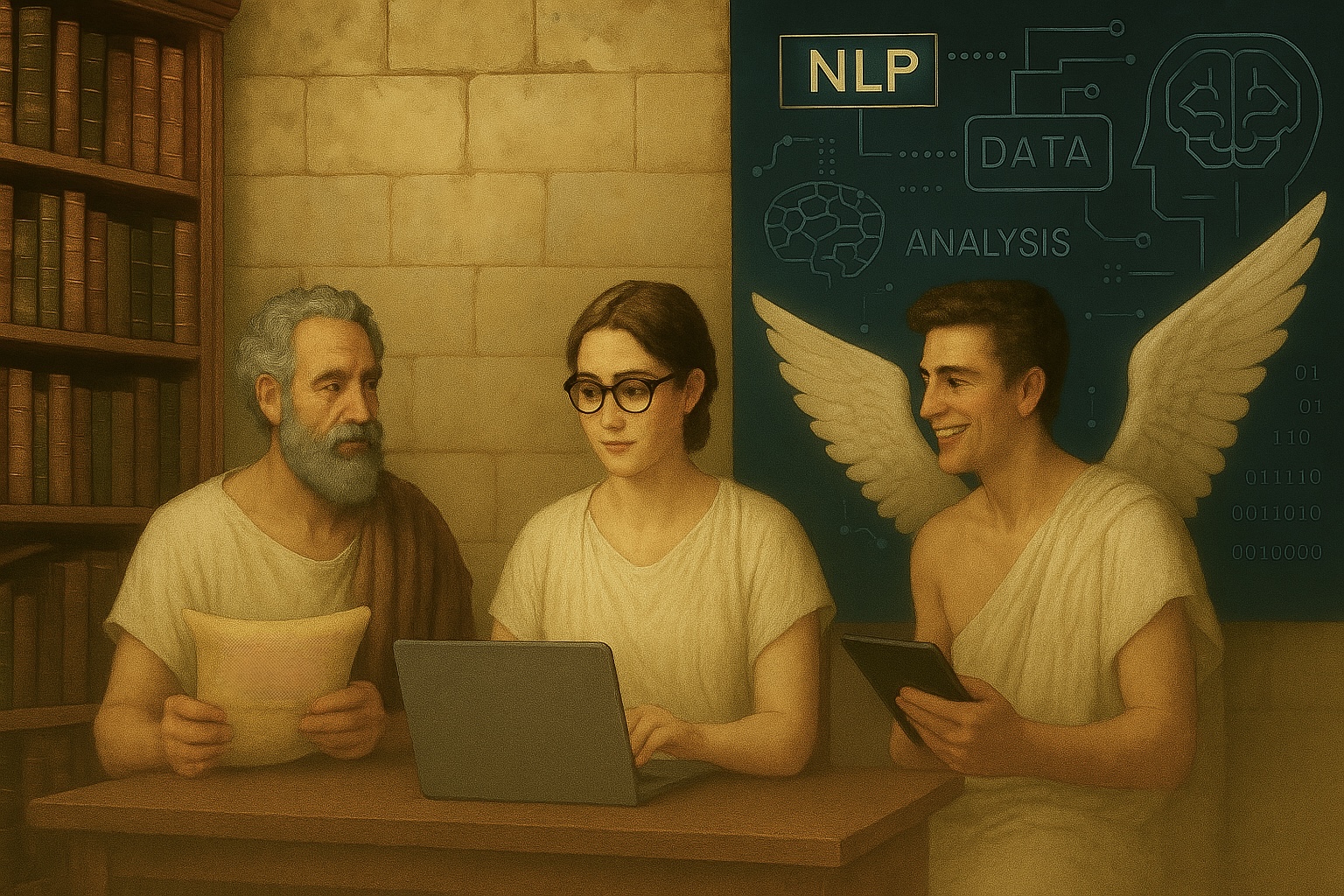
I am Lucretia, professor of classical philology. Anyone who has studied ancient historiography knows that we rarely find completely objective accounts of events. Rather, we must consider the entire narrative in context and ask why events are recounted in a certain way.
A very broad question? That’s what I thought. I prefer to ask why certain events are reported incompletely or not at all – even though this contradicts the historical facts.
So I’m looking for… What exactly are you looking for when you search for gaps in the text? In principle, I would have to examine all texts that deal with the historical context of the event I am looking for. But the search for relevant passages is only the preliminary work for my actual research – albeit very time-consuming preliminary work, considering the huge amount of text involved. A real challenge when the publication is due to appear in a few months.
That’s why I’ve decided to try something new: I want to see how well natural language processing (NLP) methods can help me extract relevant passages from several volumes of Greek and Latin primary texts.
What do I hope to achieve? If successful modelling means that I am directly “supplied” with passages relevant to the event I am looking for, I can get on with the actual work more quickly: analysing the significance of the gaps in context and drawing conclusions about the narrative intentions behind the historical work in question.
But the whole process is not as simple as ordering food from our trusted online supplier. There are still no absolutely precise tools for classical languages that can directly output all the passages I want. With all the hype surrounding AI and large language models, one might think it would be easy nowadays – but we are not there yet. I can’t programme myself; at best, I can get meaningful statistics on relevant search terms via Perseus. I must admit that my digital skills don’t extend much beyond that.
However, I am by no means alone in my field; digital skills are still rather rare in the humanities in general. That is why I would like to share here how, despite all these hurdles, I managed to compile a comprehensive collection of relevant text passages relating to the event I was looking for.
After a brief search, I learned about Daidalos, an innovative project that uses NLP for classical philology. Bull’s eye! As it happened, the Daidalos project was looking for opportunities for collaboration at that very moment.
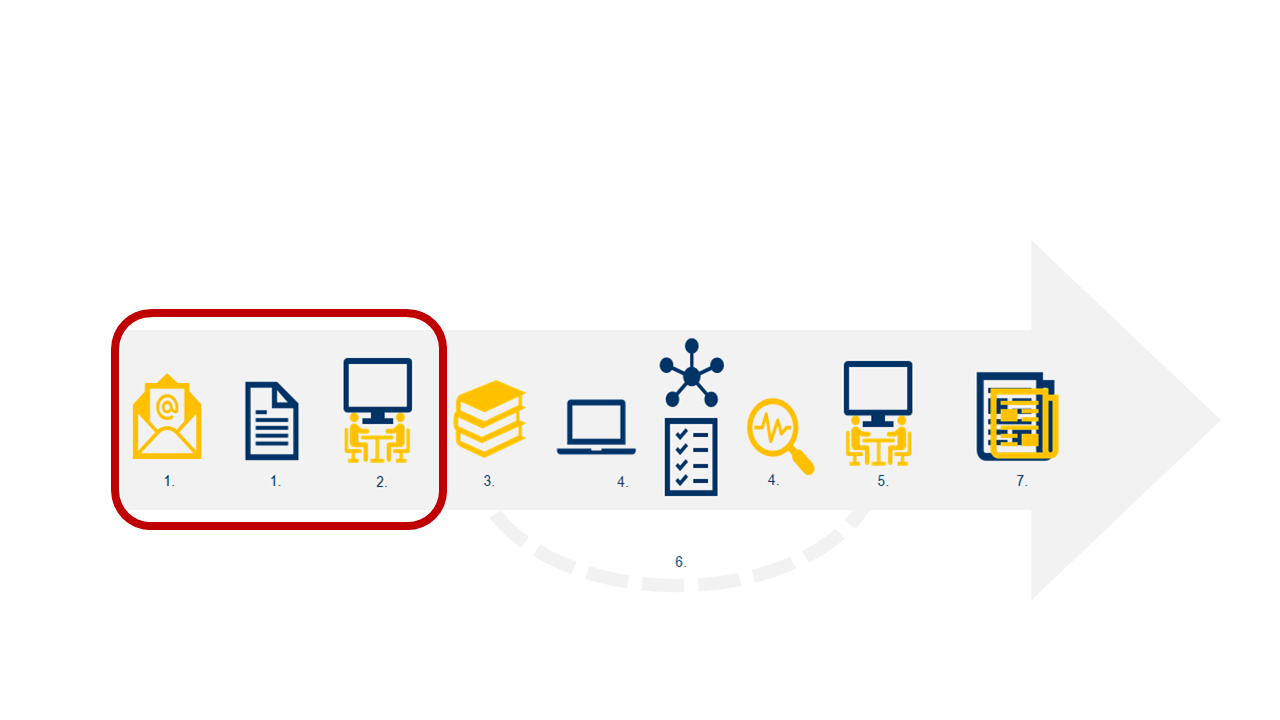
Lucretia contacted the Daidalos team by email and arranged an initial meeting.
Let’s fast forward to our first meeting: it’s not Daidalos himself sitting opposite me, but Konstantin. Although he studied Greek and Latin himself, he has immersed himself deeply in the world of machine language processing in recent years and now views my request from a perspective that is unfamiliar to me.
He already has some initial ideas on how we can operationalise my admittedly not entirely straightforward question. I quickly realise that two worlds are colliding here. All the texts and terms I usually work with are considered data in our conversation. I find it fascinating to engage with this new way of thinking.
I now have to convert my narratological observations into categories that can be processed by machine. Not so easy at first glance! But Konstantin patiently explains what is important in the first step. He helps me to concretise the research question and explains which analysis tools and visualisation options might be suitable.
After this insightful first meeting my expertise is once again in demand. So that Konstantin can build a prototype, I compile the texts that I have already evaluated and used to develop my research question. Of course, as I review my selection of texts, I come up with further ideas, which I pass on to Konstantin.
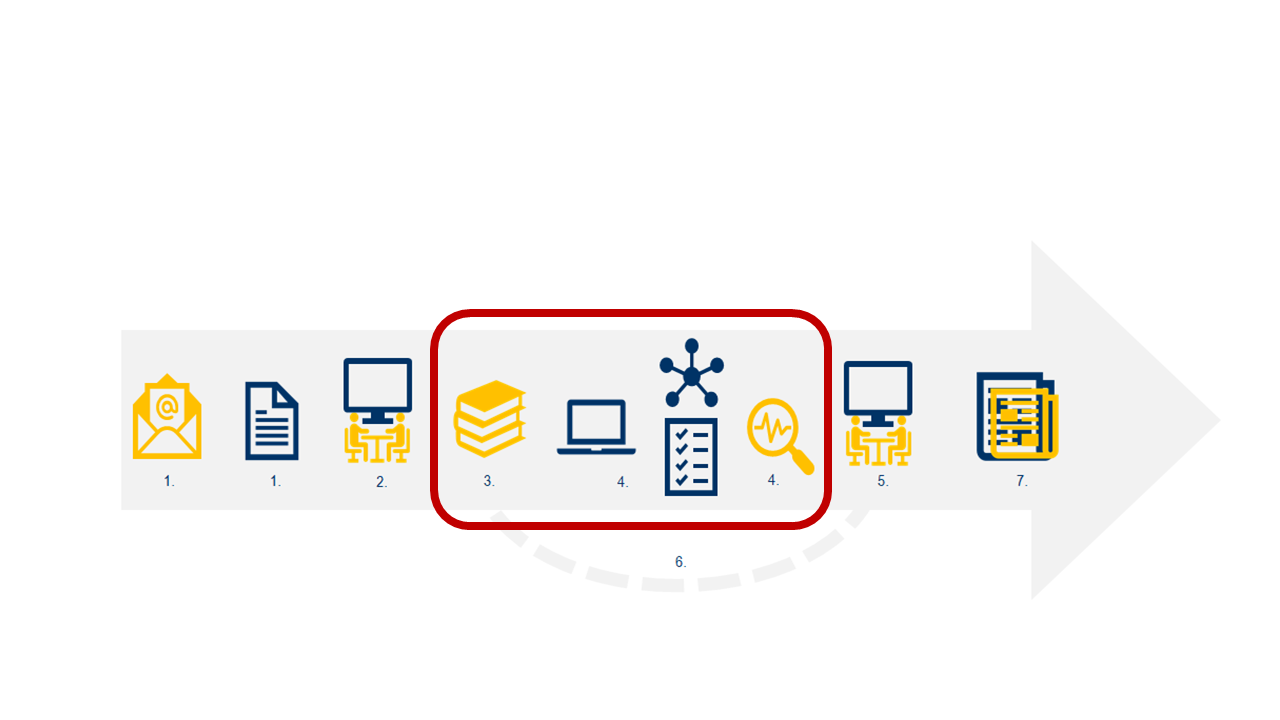
Lucretia deliberately compiles an expanded corpus. She soon receives analysis results from Konstantin. This allows her to assess how well she can continue working with the results and how much fine-tuning the prototype still needs.
At our next meeting, Konstantin first introduces me to how named entity recognition (NER) can contribute to the question. We quickly agree that highlighting important names and places is very helpful, but not yet sufficient. I want to go deeper and analyse the impact of the gap under investigation on the narrative.
Since I am also interested in a targeted analysis of the systematic overvaluation and devaluation of historical events, I am interested in further NLP methods. Is it possible to show that the respective authors use emotionally charged language when describing certain events? Based on such a finding, I could investigate whether negative affectivity is more likely to occur when events are omitted or reported incompletely.
Based on Konstantin’s explanations, a sentiment analysis of my selected texts seems to me to be a very promising next step. However, there is one difficulty here: unlike Latin, there is no preliminary work available for Greek texts. It would be a shame to stop here, because now it’s getting really exciting. Can NLP methods provide me with the passages I need to explain omissions as strategic?
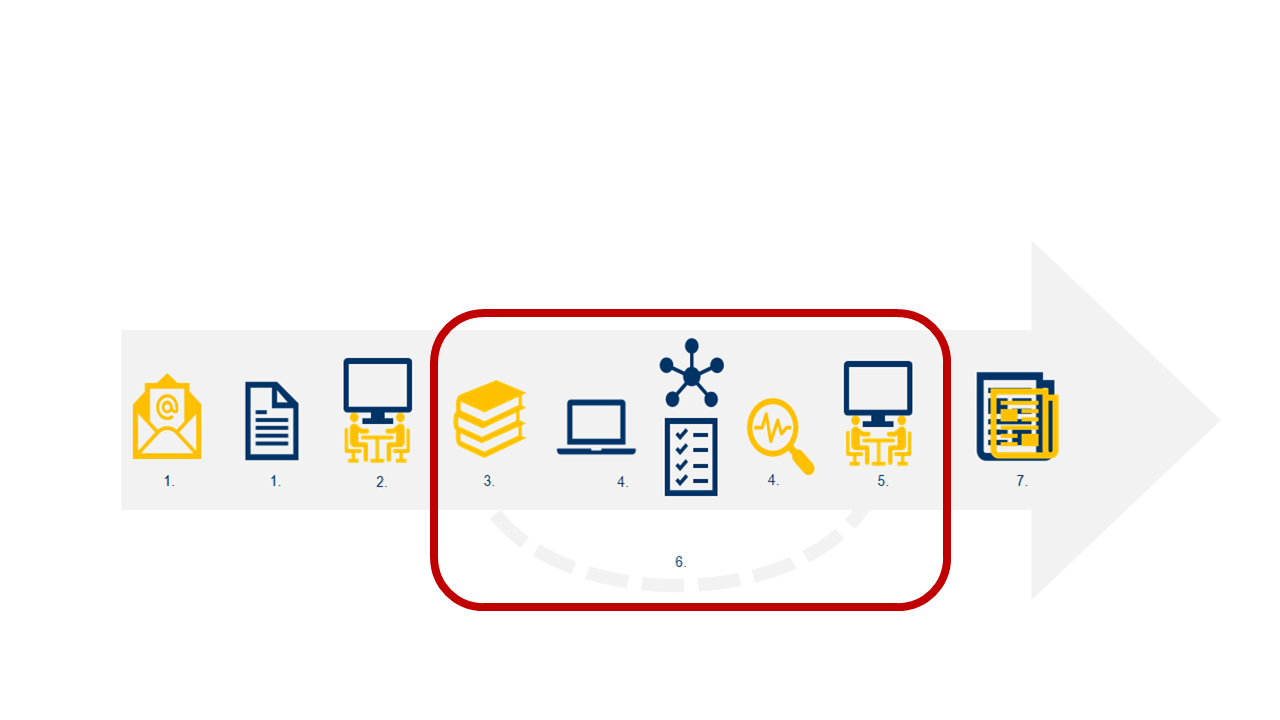
The first iteration is well prepared on both sides and the analysis results are insightful. Thus, the joint work in the research tandem continues in a targeted manner on the adapted data set.
The next round will be challenging. Because now we have to initiate sentiment analysis. And for that we need – who would have thought – data! We are carefully considering which dictionaries and translations of my selected passages to work with. I am making a few author-specific notes myself so that the AI that Konstantin is training for me will deliver even better results.
And now? I have what I wanted – marked passages and, for a change, a few evaluations in figures. This allows me to assess which passages I want to prioritise, for example. I have now completed my structured evaluation. You will soon be able to read a fresh essay by me.
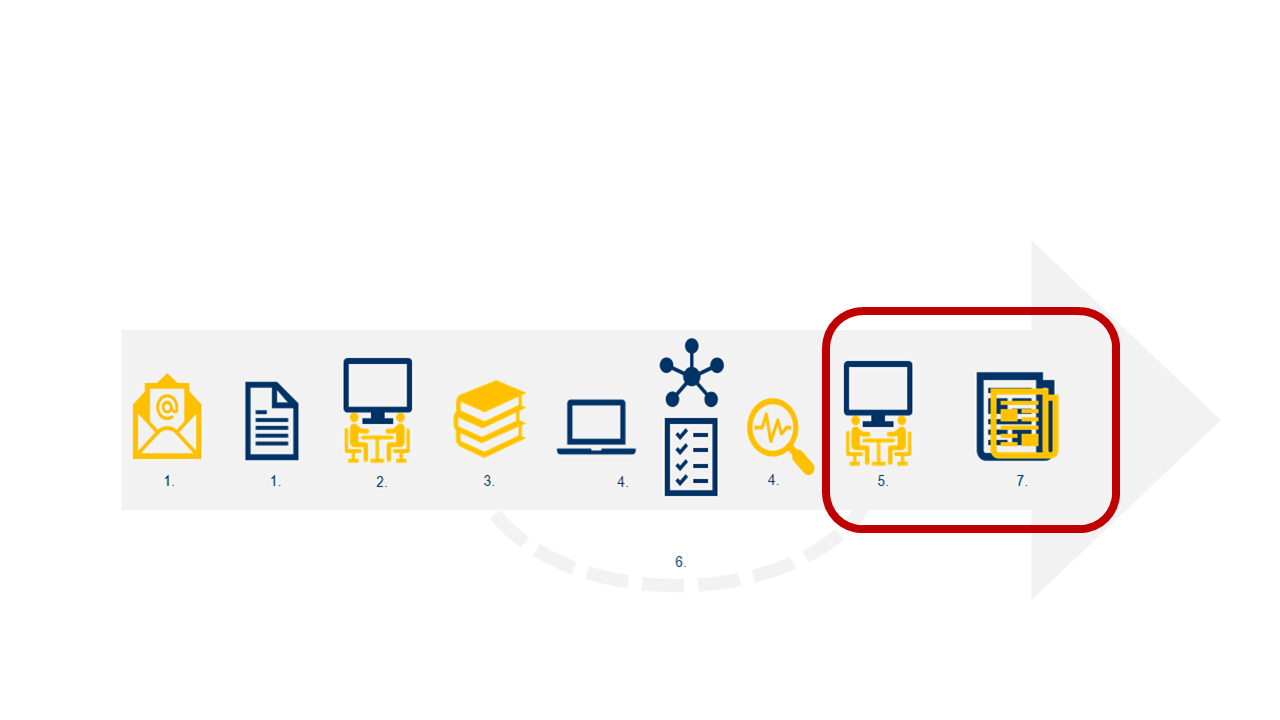
After the last iteration, Lucretia has so many meaningful analysis results that she is satisfied with the text passages she has found. She then prepares a publication that shows how her narratological expertise went hand in hand with the various NLP methods that Konstantin prepared for her.
Working with Daidalos was very worthwhile because it allowed me to see my texts through different eyes. This enriched my research. So: always stay curious!
Yours, Lucretia